Future-Ready Cultures: A Trend Forecast for HR Leaders, CEOs & Founders
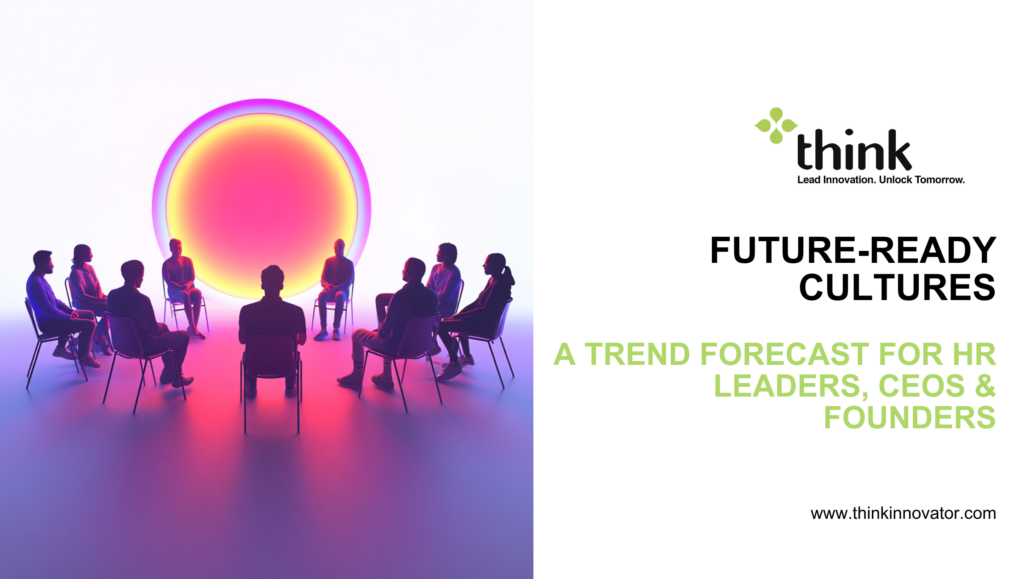 thinkinnovator.com
Organisational culture isn’t just “how we do things around here.” It’s the invisible force that determines whether innovation thrives or stalls. In an era defined by economic uncertainty, rapid technological leaps, and shifting workforce expectations, culture has become a CEO-level priority. The companies that win the next decade will be those that actively shape a future-ready culture, one that blends technology, human ingenuity, connection, and purpose.
Signals from across the internet from Reddit and Substack to YouTube creators and Google Trends show three cultural forces reshaping how people connect, work, and grow:
- AI as a co-creator in talent and culture.
- The shift from hierarchies to communities.
- The rise of human and multi-sensory experiences.
Let’s unpack what this means for leaders and why now is the time to act.
- AI as a Co-Creator in Talent & Culture
Generative AI is often discussed in marketing or product innovation circles, but its biggest cultural impact may be inside your organisation. According to Deloitte’s Marketing Trends 2025 report, companies excelling in personalisation consistently outperform their peers – customers buy more, stay longer, and become brand advocates. For HR, the parallel is obvious: personalised learning, career paths, and engagement strategies drive retention and productivity.
- The opportunity: Imagine onboarding materials tailored to each role, skill-building journeys customised to an employee’s career aspirations, or pulse surveys that adapt their questions based on previous responses.
- The driver: 75% of consumers are more likely to purchase from brands delivering personalised content. Apply that same psychology internally, and you create a workforce that feels seen and valued.
The tech is ready. Generative AI is becoming a standard feature in enterprise software, with forecasts predicting a revenue boost of US$10 billion by the end of 2024. The next leap – agentic AI goes beyond producing content. As McKinsey notes, these “virtual coworkers” can plan, decide, and execute multi-step workflows without constant human prompting.
In HR, that could mean:
- AI agents scheduling interviews across multiple calendars.
- Learning bots mapping skill gaps and creating training plans before issues emerge.
- Automated compliance checks and employee comms, freeing up HR for higher-value work.
Action points for leaders:
- Pilot AI-driven employee experiences – personalised onboarding, competency frameworks, and engagement campaigns.
- Build AI fluency – train staff to work with AI as a collaborative tool, not a replacement.
- Explore agentic HR applications – test AI agents in talent sourcing, internal mobility, and process automation.
- From Hierarchies to Communities: Redefining Engagement
The days of the one-way company newsletter are numbered. Social media trends show that big platforms have shifted from intimate connection to ad-driven feeds. In response, niche communities like Kindr, Letterboxd, and Ravelry are thriving. These are built around shared passions, values, and privacy.
Inside organisations, the same shift is underway. Employees want belonging over bureaucracy. They’re seeking micro-communities where they can connect on shared interests – whether that’s sustainability projects, cultural heritage, or wellness initiatives.
The Branding Journal notes that influencer trust is waning, with brands turning everyday customers into advocates through affiliate programs and community leadership.
Translate that internally, and your employees can become your most authentic brand ambassadors – if you give them the platform and the trust.
Action points for leaders:
- Foster internal communities – digital hubs, cross-functional “communities of practice,” and interest-based networks that break silos.
- Empower employee advocacy – recognise and reward those who represent your values externally, whether through speaking at industry events or sharing authentic stories online.
- Decentralise communication – embrace collaborative tools where dialogue flows both ways and feedback loops are transparent.
- Human & Multi-Sensory Experiences: The New Employee Experience
While technology scales connection, people still crave something technology can’t fully replicate: real, human experiences. As The Branding Journal reports, digital fatigue is driving demand for screen-free, sensory-rich interactions. Humour, authentic stories, and relatable imagery are making brand communications feel more “human” and employees want that inside their companies too.
We’re also in the “age of sustainability transparency.” Employees increasingly want to work for organisations that walk their talk on environmental and social impact. Greenwashing isn’t just risky for brand perception – it erodes trust in culture.
Then there’s the sensory shift. Forbes reports that 84% of people buy from brands they feel connected to and 63% want more multi-sensory experiences. For the workplace, that might mean:
- Soundscapes designed to improve focus and reduce stress.
- Biophilic design – plants, natural light, and organic textures to boost wellbeing.
- Rituals like in-person gatherings, ideation sprints or creative workshops to strengthen bonds.
Action points for leaders:
- Design sensory-rich environments – integrate sound, touch, scent, and nature into workspaces.
- Prioritise authenticity – communicate with humour, share real stories, and be transparent about sustainability.
- Create offline rituals – from quarterly retreats to local volunteer projects, build shared memories beyond the screen.
Bonus Insight: The Future of Search & Learning
How employees find information is changing. TikTok and AI chatbots are emerging as the new “search engines” for Gen Z and Millennials. In the workplace, this could mean:
- Policies discovered via AI assistants instead of intranet menus.
- Micro-learning videos replacing bulky PDF manuals.
- Conversational AI guiding employees through complex workflows.
For leaders, this is a call to future-proof internal knowledge systems. Make sure your content is accessible in multiple formats, from AI-powered search to video micro-lessons.
Final Reflection
The next era of work will be shaped by leaders who see culture not as a “soft” issue, but as the infrastructure of innovation.
- AI will personalise and automate work, making organisations smarter and more adaptive.
- Communities will replace hierarchies as the engines of trust and advocacy.
- Multi-sensory experiences will make workplaces more human, meaningful, and connected.
For HR leaders, CEOs, and founders, the message is clear: embrace these cultural shifts now, or risk being left behind. The companies that weave AI, community, and human experience into their culture will not only attract top talent but they’ll keep them inspired, engaged, and driving innovation well into the future.
Would you like to run an HR Future Trend Immersion that unlocks 30 future trends and helps you translate them into a pipeline of practical ideas and experiments for your team to drive? Click here to request more information.
 thinkinnovator.com
 thinkinnovator.com
  thinkinnovator.com



Leave a Reply
Want to join the discussion?Feel free to contribute!